
Most parents today will recognize the need to educate their children in moral principles and understand the importance of teaching them their family values. If parents neglect to teach children their own values, children may learn them from other sources such as school programs, movies and television, the media and social media which may not be in their best interest. Following are some suggestions for exploring and enjoying the search for these values with your children.
THE VIRTUES GUIDE: A FAMILY HANDBOOK by Linda Kavelin Popov, Dan Popov, Ph.D,and John Kavelinis a wonderful resource for helping parents to guide their child’s characteras you will discover from the following messages from this book:
“There is growing concern among parents that our children are caught up in materialism to the detriment of character; that they are picking up values which place personal gain before ethics, integrity, or love. Many of them have little or no sense of faith or spiritual values in their lives.”
”A key principle of THE VIRTUES GUIDE is that parents are the first educators, those best able to impart values and virtues to their children. The book is grounded in the sacred traditions of the world’s religions, yet it does not promote the practices or dogma of any particular religion. It addresses children as spiritual beings whose purpose in life is to have a life of purpose – to develop all the virtues and capacities which were created within them in potential.” page xi
“While THE VIRTUES GUIDE honors the various sacred traditions, it is designed to be helpful and accessible to all people, religious or not. It is an approach to bringing out the best in every child.” page xii
The Family Virtues Guide is available through Amazon.com.
THE VIRTUES PROJECT website is a great way to get started in learning what virtues are by using the Family Virtues Cards. Instructions are included with the cards for doing a Virtues Pick, a fun and inspiring activity for parents and children (or teachers and children) to learn about the virtues together as well as how to practice a particular virtue throughout the week. The cards can be purchased from www.virtuesproject.com or from Amazon.com/family-virtues-cards-project.com

WILLIAM BENNETT, FORMER SECRETARY OF EDUCATION, OFFERS ADVICE TO PARENTS AND TEACHERS
Another inspiring resource is William Bennett’s Book of Virtues for Young People for ages 7 and up. Both parents and teachers will find it helpful in imparting traditional values to children. William Bennet explains that “the dictionary defines virtue as ‘a particular moral excellence.’ It comes from the Latin word virtuous, meaning ‘strength’ or ‘worth’.” Virtues come in different varieties and this book focuses on ten specific virtues – friendship, courage, self-discipline, compassion, responsibility, work, honesty, loyalty, perseverance and faith.
By presenting a variety of inspiring stories and incidents demonstrating each of these virtues with the goal of guiding young people to good actions he reminds us that “good intentions are not enough” – parents and teachers must be purposeful in imparting these values. This helpful book is appropriate for home as well as school use.
A sampling of the many stories includes:
- The Boy Who Tried to Be the Sun, a Native American tale
- A Greek story about King Cyrus showing great mercy to his enemy
- Saint George and the Dragon
- Landing of the Pilgrim Fathers
- Nathan Hale’s Noble Sacrifice
- The Long Hard Way Through the Wilderness
- Honest Abe
- Helen Keller and Anne Sullivan, a story of friendship
- The Village Blacksmith, a poem by Henry Wadsworth Longfellow
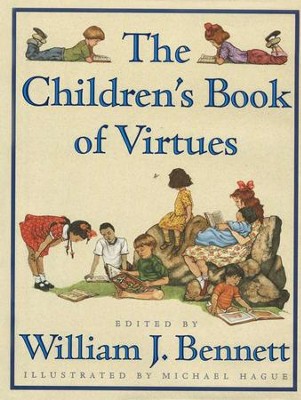
As with his Book of Virtues for Young People William Bennett’s Children’s Book of Virtues is full of selected poems and stories from around the world that will assist parents and teachers in their desire to inspire younger children ages 3-8 as they grow and begin to develop virtues of kindness, honesty, loyalty, patience, perseverance and compassion.
These stories include:
- African Folktales
- Heroes of America
- Aesop’s Fables
- Native American Tales
- Poems by Robert Frost and other poets
Both of Mr. Bennett’s books are available through Amazon.com.
TALES AND FABLES FOR CHILDREN
Aesop’s Fables for Young Readers is a collection of tales that teach moral values and are delightful for both children and parents to read. Perhaps you remember such tales as The Lion and the Mouse, The Rabbit and the Turtle, or The Goose That Laid the Golden Egg. This and similar books are available from Amazon and other bookstores. Ages 5 years and up
Because it is important for children to learn about other cultures,you might also introduce them to the Jataka Tales, a book that portrays the wisdom of an ancient culture in India, demonstrating universal morals in an enchanting way for children and adults to enjoy. Stories such as The Wise Son, The Golden Deer, and The Monkey Business are included in this edition. Ages 6 years and up. Also available at Amazon.

3 – 12 years old (Amazon)
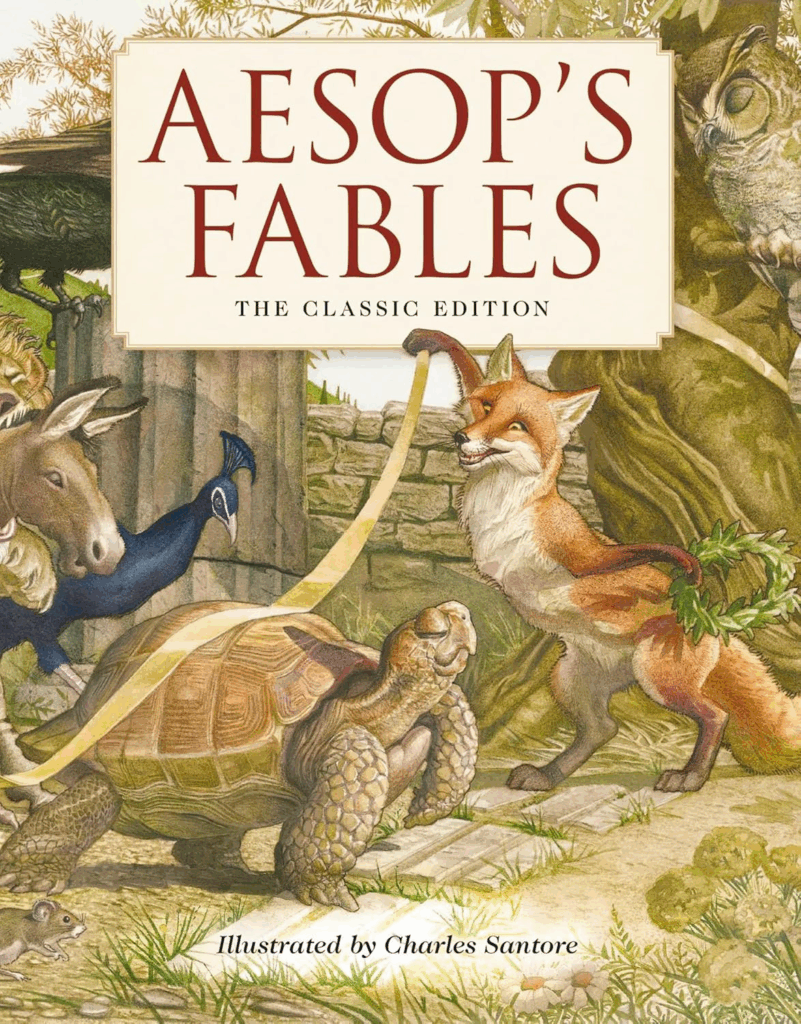
Aesop’s Fables Classic Edition
3 years old – adults
(Amazon)